
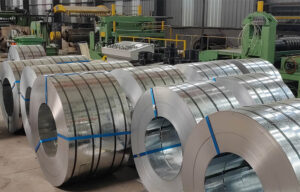
 Galvanized Coils (Sheets/Strips)
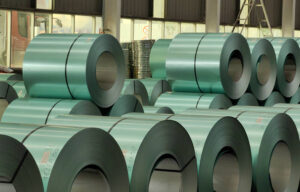 Galvalume Coils (Sheets/Strips)
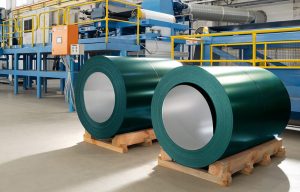 PPGI/PPGL Coils
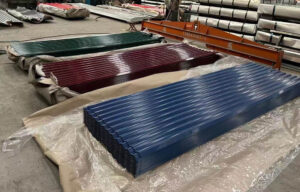 Corrugated Roofing sheets
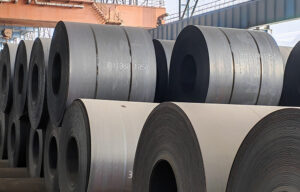 Hot Rolled Coils (Sheets/Strips)
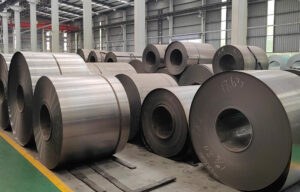 Cold Rolled Coils (Sheets/Strips)
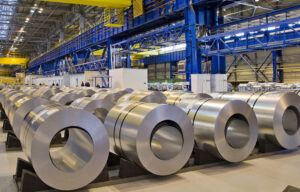 Aluminum Coils (Sheets)
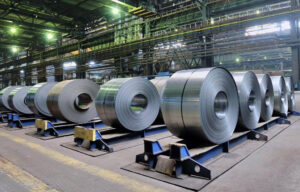 Tinplate Coils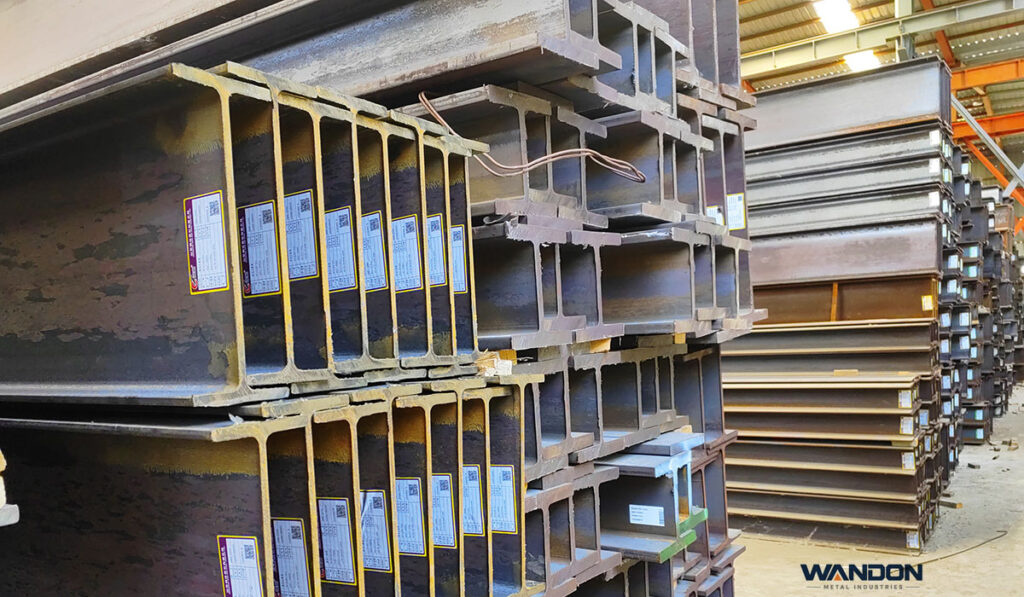
Choosing a steel beam requires confirming the section series, full dimensions, steel grade, length, and project requirements—not just the height or the fact that it has an H-shaped profile.
Terms such as W, HEA, HEB, IPE, IPN, and IPR appear in drawings, catalogs, and quotation requests. Although some sections look similar, their dimensions and properties can differ. A section should not be substituted for another based only on its name or an approximate measurement.
This guide explains how to identify the main families of structural steel sections, what their dimensions mean, and what information to prepare before requesting a quotation.
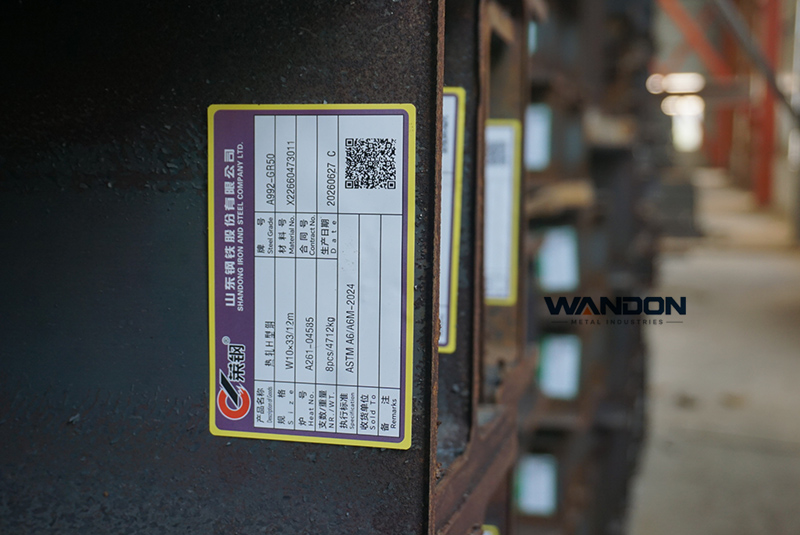
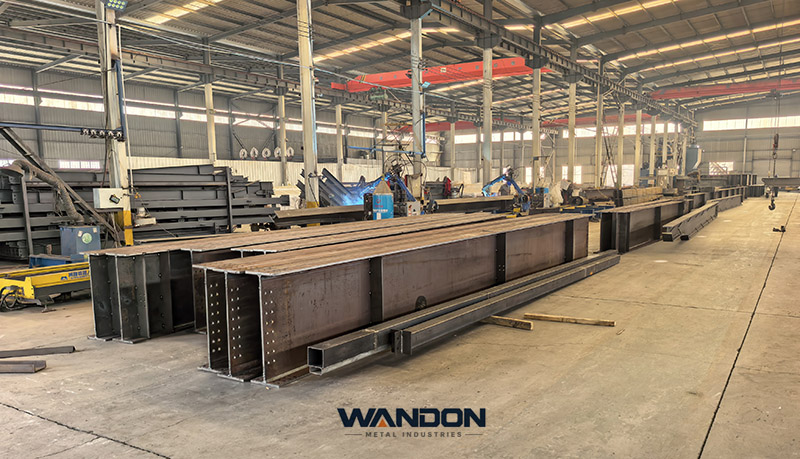
ASTM A992 Grade 50 W10×33 H-Beams, 12 m
What Is a Steel Beam?
A steel beam is a structural member designed to support loads and transfer them to other parts of a structure, such as columns, supports, or connections. Steel beams are used in industrial buildings, warehouses, buildings, platforms, roofs, and other applications.
The shape of a section affects its structural behavior, but shape alone does not determine whether a beam is suitable for a project. Selection also depends on the span, loads, support conditions, connections, stability, and structural design requirements.
A search for steel beam sizes can help you find reference dimensions, but the final selection should follow the project design and specifications.
Main Types of Structural Steel Sections
Section designations depend on the naming system and catalog being used. The following are some of the most common families. Review the full specifications before comparing sizes or requesting a quotation.
| Section family | How it is identified | What to confirm |
|---|---|---|
| W | Designation for wide-flange sections in the U.S. system, such as W14×38 | Catalog dimensions, weight per unit length, material, and project specifications |
| HEA / HEB | Metric H-section families, such as HEA 200 or HEB 200 | Exact dimensions, weight, steel grade, and the standard shown in the catalog |
| IPE / IPN | I-section families identified by series and nominal size | Flange geometry, full dimensions, and section properties |
| IPR | A commercial designation used in some markets for I-type sections | Local meaning, actual section, standard, and steel grade |
A designation helps identify a section within a family, but it does not replace the technical data sheet. Two sections with similar numbers can have different widths, thicknesses, and weights.
W Sections
W sections use designations such as W14×38. This designation should be read using the relevant catalog. It does not provide every dimension of the section and should not be compared directly with a metric designation such as HEA 200.
When a drawing specifies a W section, keep the full designation and verify its dimensions and properties in the applicable technical table. Confirm the required steel grade separately.
HEA and HEB Sections
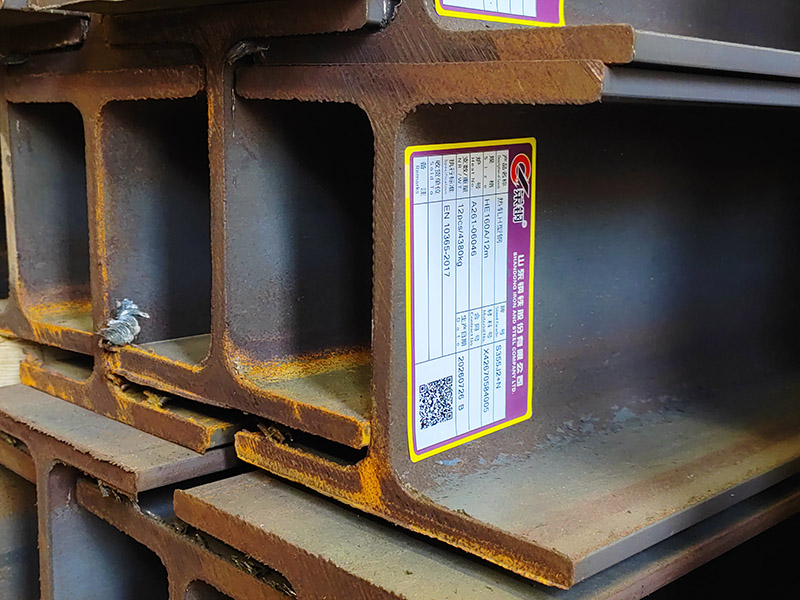
HEA and HEB are families of H sections commonly found in catalogs and bills of materials. A designation such as HEA 200 or HEB 200 identifies a series and nominal size, but it does not mean that the two sections have the same dimensions or properties.
If a customer requests an HEA or HEB section, confirm the exact series. Do not replace it with another H section simply because the height is similar.
IPE and IPN Sections
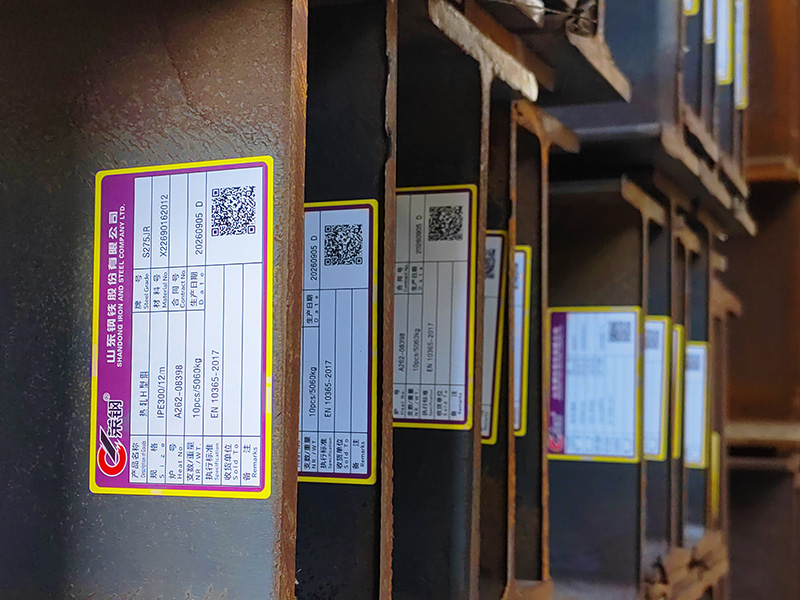
IPE and IPN are different designations. To identify them correctly, check the section dimensions in the relevant technical catalog, especially the flange geometry and thicknesses.
If a bill of materials only says “I-beam” or “I-section,” there may not be enough information to prepare an accurate quotation. Ask for the full model or an image of the drawing or section table.
IPR Sections
In some markets, IPR is used commercially to refer to I-type sections. Because the terminology can vary by country or supplier, always confirm the exact section, its dimensions, and the required specification.
If the customer does not have a standardized designation, a section drawing, technical data sheet, or full set of dimensions can help identify it.
How to Read Steel Beam Dimensions
Section tables usually list several dimensions and properties. The most common include:
- Overall depth: the distance from the top of the section to the bottom.
- Flange width: the width of each flange.
- Web thickness: the thickness of the vertical center portion.
- Flange thickness: the thickness of the horizontal portions.
- Weight per unit length: usually expressed in kg/m or lb/ft.
- Commercial or required length: the length of each piece needed for the project.
When a specification lists dimensions, confirm the order of the values. For example, if a customer writes H 200 × 200 × 8 × 12 mm, confirm whether the values refer to overall depth, flange width, web thickness, and flange thickness, respectively.
Not every country, supplier, or drawing uses the same format. If the order is unclear, ask for a section drawing or technical data sheet.
A Designation Does Not Always Give the Full Dimensions
A nominal designation such as IPE 200 or HEA 200 identifies a section within a family, but you should consult the tables for that family to verify its actual dimensions.
Likewise, a designation in inches and pounds per foot, such as W14×38, should not be compared with a 200 mm metric section based only on the number “14.” Each section family is defined by its own catalogs and properties.
Which Section Should You Choose for a Project?
There is no single beam that is suitable for every project. Selection should be based on the structural specifications and conditions of use.
Before choosing or substituting a section, review:
- Structural application: a factory, warehouse, roof, platform, or another use.
- Span and supports: the distance between columns or support points and the connection conditions.
- Design loads: dead loads, live loads, wind, seismic loads, or other loads relevant to the project.
- Stability and deflection: buckling, bracing, and deflection-limit requirements.
- Steel grade: it must match the project documents.
- Standard and design system: these must be compatible with the drawings and destination market.
- Fabrication and installation: length, cutting, drilling, welding, and other processes.
The project’s responsible engineer should review any proposed section substitution. Two beams with similar depths do not necessarily have the same capacity or qualify as direct replacements without recalculation.
The Difference Between a Section and a Steel Grade
The section describes the shape and dimensions of the cross-section—for example, W, HEA, HEB, or IPE.
The steel grade describes the material properties and is specified under the relevant standard. A request may include designations such as ASTM A36 or ASTM A572, but the exact standard and grade should be confirmed against the drawings or project specifications.
A complete request should therefore state both the section and the required material. Simply writing “ASTM beam” may not be enough because it does not identify the section series, dimensions, or specific grade.
What Information Should You Provide for a Steel Beam Quotation?
To check availability and prepare a quotation, provide:
- The full section series: W, HEA, HEB, IPE, IPN, IPR, or another type.
- The exact size of each section.
- The required standard and steel grade.
- The required length per piece.
- The number of pieces or estimated weight for each section.
- Any cutting, drilling, welding, or finishing requirements.
- The destination port or city.
- Structural drawings or a bill of materials, if available.
If you do not know the exact section, a photo of the drawing, a dimensioned cross-section, or a section table can help identify it.
Common Mistakes When Buying Steel Beams
1. Specifying only “H-beam”
“H-beam” can refer to different section families. Provide the series and full size.
2. Confusing a nominal size with an actual dimension
A number in a designation does not always correspond to the section’s exact depth. Check the technical table for the relevant series.
3. Assuming similar sections are equivalent
W, HEA, HEB, IPE, and IPR sections should not be substituted for one another just because they look similar or have comparable depths.
4. Leaving out the steel grade
The section designation does not specify the material by itself. State the grade and standard required for the project.
5. Requesting a quotation without confirming length and quantity
The length of each piece and the number of pieces affect price, fabrication, packaging, and transportation.
Frequently Asked Questions
Is W14×38 the same as HEA 200?
No. These are designations from different section families. Comparing them requires the technical dimensions and properties of each section, as well as a review of the structural design.
Can an IPE beam be replaced with a W or HEA section?
Do not assume they are interchangeable. Any substitution requires checking the section properties and obtaining approval from the engineer responsible for the project.
How can I find the dimensions of a steel beam?
Look up the full designation in the manufacturer’s or supplier’s technical table. Check the overall depth, flange width, thicknesses, weight per meter, and applicable standard.
What does “steel beam sizes” mean?
It usually refers to searches for beam dimensions or specifications. To identify a specific section, you need the section series, size, thicknesses, and, where applicable, the steel standard and grade.
What if I only have an approximate dimension?
Send the drawing, a sketched cross-section, or all the dimensions you have. A professional can confirm what information is missing and whether the section matches the design.
Find the Right Section for Your Project
A clear specification helps prevent identification, quotation, and supply errors. Before placing an order, confirm the section family, dimensions, steel grade, length, and quantity.
WANDONG STEEL STRUCTURE can help review the requested sections and prepare a quotation based on your bill of materials or drawings. Send us the section model, required length, and quantity. If you have drawings, include them to make the review easier.
Technical References
- AISC Shapes Database
- ASTM A6/A6M — General Requirements for Rolled Structural Steel Bars, Plates, Shapes, and Sheet Piling
- ASTM A572/A572M — High-Strength Low-Alloy Columbium-Vanadium Structural Steel
- ArcelorMittal — IPE Section Range