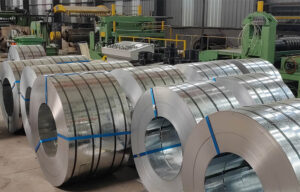
 Galvanized Coils (Sheets/Strips)
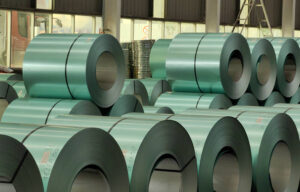 Galvalume Coils (Sheets/Strips)
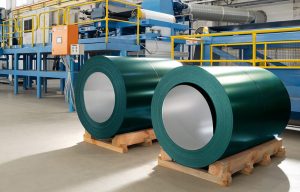 PPGI/PPGL Coils
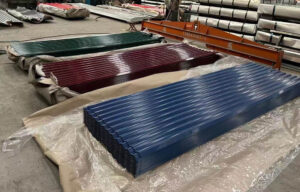 Corrugated Roofing sheets
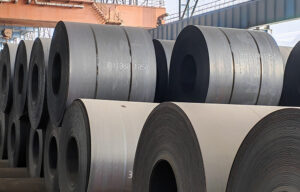 Hot Rolled Coils (Sheets/Strips)
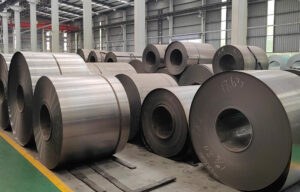 Cold Rolled Coils (Sheets/Strips)
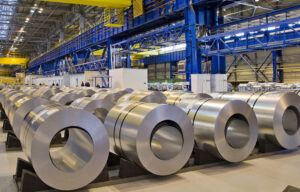 Aluminum Coils (Sheets)
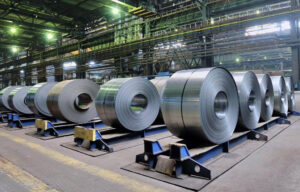 Tinplate Coils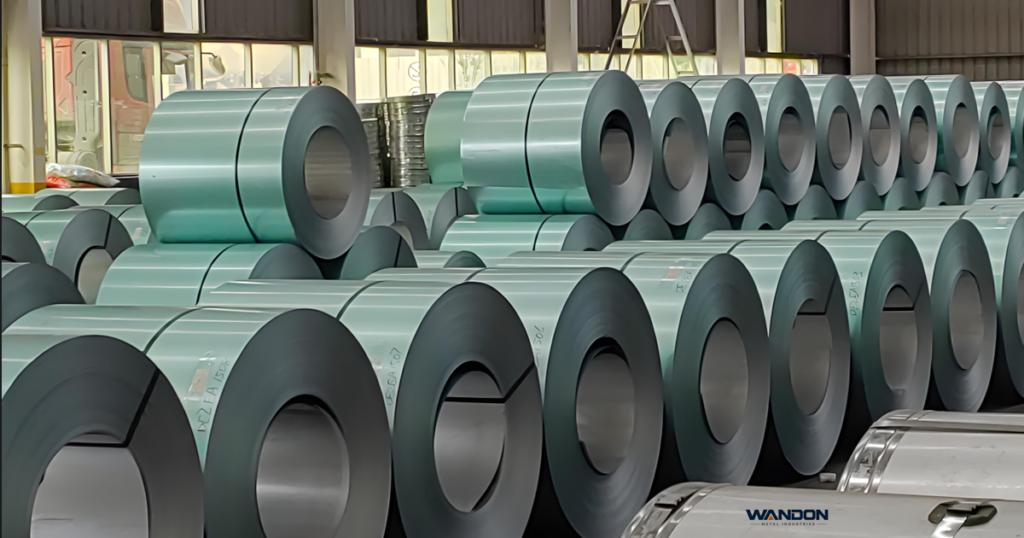
Every steel buyer wants a better price. There is nothing wrong with that. However, some of the most expensive steel sourcing mistakes
begin with a quotation that looks almost too good to refuse.Price comparison, negotiation and cost reduction are all essential parts of international sourcing.
However, after years of working with steel buyers across South America, the Middle East, Africa and other markets, I have seen the same mistake happen again and again:
One of the most common steel sourcing mistakes happens when a buyer receives several reasonable quotations — and then chooses the one price that seems almost impossible.
Sometimes the deal works.
But sometimes the real cost appears later:
- The material doesn’t match the specification.
- The actual thickness is lower than expected.
- The coating weight is insufficient.
- The quantity is short.
- Additional charges suddenly appear.
- The supplier becomes unreachable after payment.
In the worst cases, the buyer loses the entire deposit.
So the real question isn’t:
“How can I find the cheapest steel supplier?”
A better question is:
“Why is this price so much lower, and can I verify the reason?”
Why Unrealistically Low Steel Prices Are So Attractive
Most buyers don’t intentionally take unnecessary risks.
The problem is that an unusually low quotation can easily look like a special opportunity.
You may start thinking:
“Maybe this supplier has better mill connections.”
Or:
“Maybe they have old inventory.”
Or:
“Maybe they’re entering my market and accepting a very small margin.”
And sometimes, one of these explanations may actually be true.
That’s why an unusually low price doesn’t automatically mean fraud.
However, the larger the difference from comparable market quotations, the more important it becomes to understand why the difference exists.
If five comparable suppliers are offering similar prices and one supplier is dramatically cheaper, don’t immediately ask:
“Why are the other five so expensive?”
Ask:
“What is different about this quotation?”
That small change in thinking can prevent a very expensive sourcing mistake.
A Common Situation in Steel Sourcing
Focusing only on the final price without comparing the actual specifications is one of the easiest steel sourcing mistakes to make.
Imagine you’re buying Galvalume Steel Coil from China.
You send exactly the same inquiry to six suppliers.
Five quotations come back within a relatively similar range.
Then the sixth quotation is dramatically lower.
Naturally, it gets your attention.
But before comparing the final price per ton, compare what’s actually included.
Is the material grade the same?
Is the actual thickness the same?
Is the thickness tolerance the same?
Is the AZ coating weight the same?
Is the steel mill the same?
Is the coil weight calculated the same way?
Are export packaging and processing included?
Are the payment and delivery terms the same?
Only after these factors are aligned can you know whether you’re actually comparing the same product.
The important principle is:
Don’t just compare prices. Compare what you’re actually buying.
The Steel Market Is Competitive, Not Magical
Steel is a highly competitive global commodity.
Suppliers can certainly have different costs.
A mill may offer a temporary discount.
A trader may have low-cost inventory.
A processor may have a better purchasing channel.
A company may also accept a smaller margin to win a new customer.
All of these are legitimate reasons for a lower quotation.
However, steel still has a cost structure.
Raw materials cost money.
Rolling and processing cost money.
Coating costs money.
Packaging costs money.
Transportation costs money.
Therefore, when a quotation is dramatically below comparable offers, the difference should have a reasonable commercial explanation.
A legitimate low price should have a legitimate explanation.
Why Can One Steel Quotation Be Much Cheaper?
There are several possibilities.
Not all of them involve fraud.
But each one deserves investigation.
1. Different Material
The quotation may be based on a different grade, mill or raw material than you expected.
Two products can look almost identical while having very different properties and costs.
2. Different Actual Thickness or Tolerance
A quotation may show the same nominal thickness while using a different tolerance.
For a large order, even a small difference in actual thickness can create a significant cost difference.
3. Different Coating Weight
This is particularly important for galvanized and aluminum-zinc coated products.
Lower zinc or AZ coating can reduce production cost, but it may also reduce corrosion resistance and service life.
4. Different Weight Calculation
Is the supplier quoting according to:
Actual weight?
Or:
Theoretical weight?
Both methods can be legitimate.
The problem occurs when the buyer and supplier don’t clearly agree on the same method.
5. Some Costs Are Not Included
The first quotation may exclude:
- Export packaging
- Processing
- Surface treatment
- Special tolerances
- Testing
- Inland transportation
- Other required services
The price looks attractive at first.
The additional costs appear later.
6. Genuine Inventory or Commercial Discount
Sometimes a low price really is a good deal.
The supplier may have excess inventory or discounted stock.
That’s why low prices should be verified rather than automatically rejected.
7. The Worst-Case Scenario: There Is No Real Deal
In some cases, the supplier never intended to deliver what was promised.
Professional websites, factory photographs, certificates and product videos don’t necessarily prove that the company controls the factory or goods.
This is why supplier verification matters before significant payments are made.
Why Reliable Suppliers Sometimes Lose Orders
There is an uncomfortable reality in international trade.
A responsible supplier may tell you:
“We can’t make this specification at that price.”
Another supplier may simply say:
“No problem.”
The second answer sounds better.
But the important question is:
Can they actually deliver what they promised?
Reliable suppliers usually have to consider:
- Real raw material costs
- Actual specifications
- Production capability
- Quality requirements
- Realistic lead times
- Inspection requirements
As a result, the most responsible quotation isn’t always the most attractive one.
That doesn’t mean the higher-priced supplier is automatically better.
It simply means:
A quotation should be evaluated by what will actually be delivered, not only by the number at the bottom of the page.
The Cheapest Steel Price Is Not Always the Lowest Cost
Many costly steel sourcing mistakes happen because purchase price is evaluated separately from quality and risk.
Suppose Supplier A is USD 50/MT more expensive than Supplier B.
For a 20-ton order, the difference is:
USD 1,000.
Naturally, Supplier B looks more attractive.
But now consider the potential cost of:
- Wrong material
- Insufficient thickness
- Insufficient coating
- Quantity shortage
- Production delays
- Rejected products
- Customer claims
- Replacement goods
- Additional freight
- Losing the deposit
Suddenly, USD 1,000 doesn’t look very large.
This is why experienced buyers look beyond the purchase price.
A better sourcing formula is:
Right Product + Right Supplier + Right Price + Controllable Risk
How to Check an Unusually Low Steel Price
If you receive a surprisingly low quotation, don’t immediately reject it.
Investigate it.
Step 1: Check the Market Yourself
One of the simplest ways to judge whether a steel quotation is reasonable is to follow the Chinese commodity market yourself.
You don’t have to rely only on what suppliers tell you.
Chinese financial and futures market apps, such as Eastmoney Futures (东方财富期货), provide daily market data for major metals and raw materials, including:
- Iron ore
- Hot-rolled coil
- Stainless steel
- Aluminum
- Zinc
- Copper
- Other metal commodities
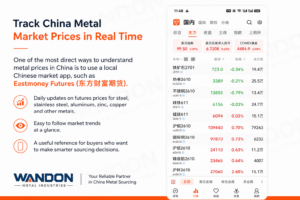
These prices are updated continuously, making it much easier to understand whether the overall market is rising, falling or remaining relatively stable.
Important: Futures prices are not the same as the final price of physical steel products.
The actual price you pay will still depend on the steel mill, grade, thickness, coating, processing, quantity, packaging, freight and other commercial factors.
However, futures and commodity market data provide something very valuable:
An independent reference point.
For example, if raw material and steel market prices have remained relatively stable, but one supplier suddenly offers a dramatically lower price than everyone else, you have a good reason to ask:
“What makes your price so different from the market?”
The goal is not to become a commodity trader.
The goal is simply to understand the market well enough that an unrealistic quotation doesn’t look like a miracle.
Step 2: Ask Why the Price Is Lower
Don’t simply ask:
“Can you give me another USD 20 discount?”
Ask:
“Your quotation is significantly below the other comparable offers we’ve received. Could you explain where the price difference comes from?”
A legitimate supplier should normally be able to explain the commercial reason.
Step 3: Verify the Supplier
Supplier verification can prevent some of the most serious steel sourcing mistakes before a deposit is paid.
Check:
- Company registration
- Factory location
- Manufacturing capability
- Relationship with the claimed factory
- Export experience
- Bank account information
Step 4: Verify the Product
Depending on the material, check:
- Material Test Certificate
- Grade
- Chemical composition
- Thickness
- Tolerance
- Coating
- Dimensions
- Surface
- Quantity
- Packaging
Step 5: Inspect Before Shipment
For significant orders, consider:
Pre-Shipment Inspection
and, when appropriate:
Container Loading Supervision
Don’t wait until the material reaches your country to discover a problem that could have been identified before shipment.
Smart Steel Sourcing Is About Price and Risk
Professional sourcing doesn’t mean always choosing the most expensive supplier.
And it certainly doesn’t mean avoiding every low quotation.
It means understanding the relationship between:
Price + Product + Supplier + Risk
A good purchasing decision should answer four questions:
Am I buying the right product?
Am I buying from the right supplier?
Is the price commercially reasonable?
Can I control the major risks before payment and shipment?
If the answer to all four is yes, you’ve probably found a much better deal than simply choosing the lowest number.
How WANDON Helps You Reduce Sourcing Risk in China
For international buyers, one of the biggest challenges is distance.
You may be thousands of kilometers away from the supplier, factory and goods.
That’s where local verification can help.
WANDON supports international metal buyers with:
- Metal Sourcing
- Supplier Verification
- Factory Audits
- Product Inspection
- Production Monitoring
- Quality Control
- Pre-Shipment Inspection
- Container Loading Supervision
And you don’t necessarily have to purchase the material from WANDON.
If you already have a Chinese supplier, we can still help verify the factory or inspect the goods on your behalf.
The goal isn’t to tell you:
“The cheapest supplier must be fake.”
The goal is to help you answer:
“Why is this supplier cheaper, and what am I actually buying?”
Received a Steel Price That Looks Too Good to Be True?
Don’t rush to reject it.
But don’t rush to send the deposit either.
Verify first.
If you’ve received an unusually low quotation from a Chinese supplier, you can send us the quotation and product specification.
We can help you identify:
- Specification differences
- Missing information
- Unusual commercial terms
- Potential sourcing risks
- Whether supplier verification is recommended
- Whether factory or product inspection is necessary
Because sometimes a low price really is a good opportunity.
The important thing is knowing why it’s low.
Final Thoughts
After years in international steel trade, one lesson remains consistent:
The market rarely rewards wishful thinking.
The goal of sourcing from China shouldn’t be to find the cheapest supplier at any cost.
Nor should it be to pay more simply because a higher price feels safer.
The goal is to understand what you’re buying, who you’re buying from, and whether the price makes commercial sense.
So when one quotation looks dramatically better than every other offer, don’t immediately celebrate.
Ask one more question:
“Why?”
That question may save you far more than another USD 10 or USD 20 per ton ever could.
Most steel sourcing mistakes are easier and cheaper to prevent before payment than to solve after shipment.
Remember:
Good suppliers help you save money.
Great sourcing helps you avoid losing money.