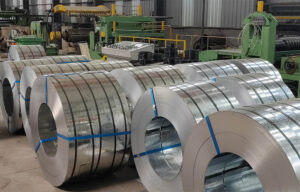
 Galvanized Coils (Sheets/Strips)
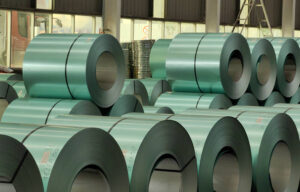 Galvalume Coils (Sheets/Strips)
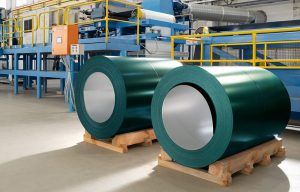 PPGI/PPGL Coils
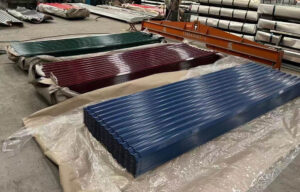 Corrugated Roofing sheets
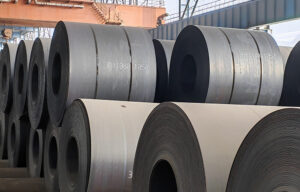 Hot Rolled Coils (Sheets/Strips)
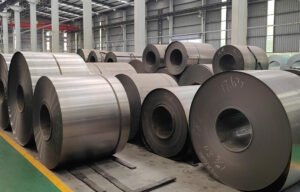 Cold Rolled Coils (Sheets/Strips)
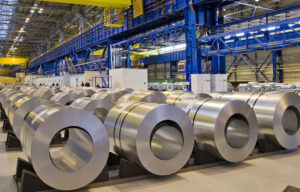 Aluminum Coils (Sheets)
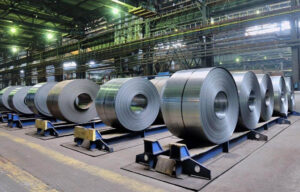 Tinplate Coils
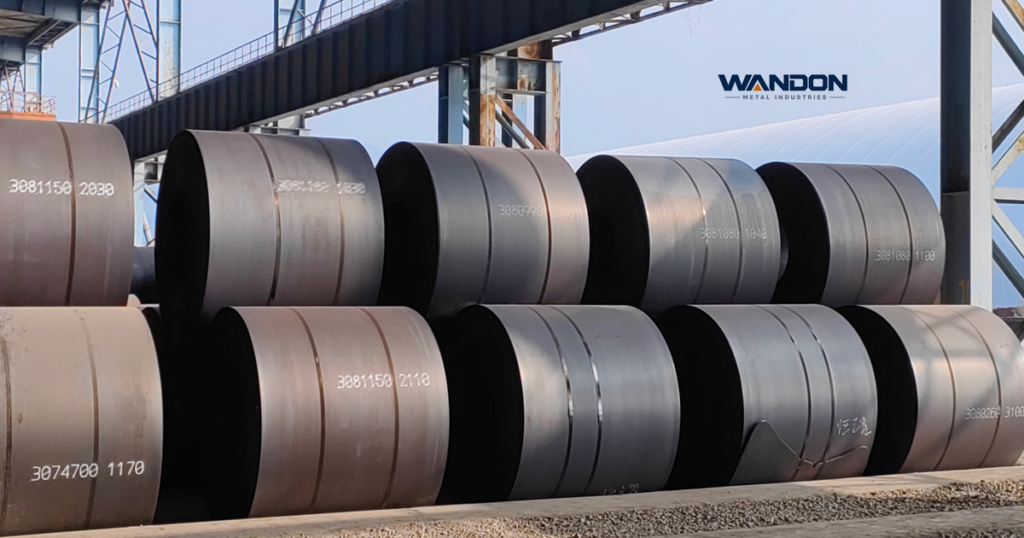
Steel trade scams remain a real risk for international buyers sourcing steel products from China.
China has thousands of steel mills, processors, exporters and trading companies. Most are legitimate businesses. However, when buyers deal with unfamiliar suppliers, problems can happen.
These problems may include unrealistically low prices, material substitution, thickness shortages, insufficient coating weight, shipment shortages, or even suppliers disappearing after receiving payment.
Fortunately, many of these risks can be reduced through careful verification.
The principle is simple:
Verify the supplier. Verify the specification. Verify the goods.
In this guide, we’ll explain seven common risks and show you how to avoid steel trade scams when buying steel from China.
1. The Low-Price Trap in Steel Trading
Every buyer wants a better price.
There is nothing wrong with comparing quotations and negotiating with suppliers. Price comparison is an important part of international sourcing.
However, an unusually low quotation deserves a closer look.
Imagine that you send exactly the same inquiry to five Chinese suppliers.
Four suppliers offer similar prices. Then, one supplier suddenly quotes 20%, 30%, or even 40% less.
At first, it may look like a great opportunity.
But before you send a deposit, ask one important question:
Why is this supplier able to offer such a low price?
There may be a legitimate explanation.
For example, the supplier may have discounted inventory. The mill may be offering a special price. The specification may be slightly different. Or the supplier may simply be accepting a smaller margin.
However, a large price difference should have a reasonable explanation.
What Should You Compare?
Don’t compare only the final price per ton.
Make sure every quotation is based on the same:
- Material grade
- Standard
- Actual thickness
- Thickness tolerance
- Width
- Coating weight
- Surface finish
- Steel mill or origin
- Actual or theoretical weight
- Packaging
- Payment terms
- Delivery terms
Two quotations may look similar while actually representing different products.
Unrealistically low quotations are often associated with steel trade scams, especially when the price difference cannot be clearly explained.
A low price isn’t automatically a scam. An unexplained low price is a risk.
The Rule
Don’t just compare prices. Compare what you’re actually buying.
2. Steel Grade and Material Substitution
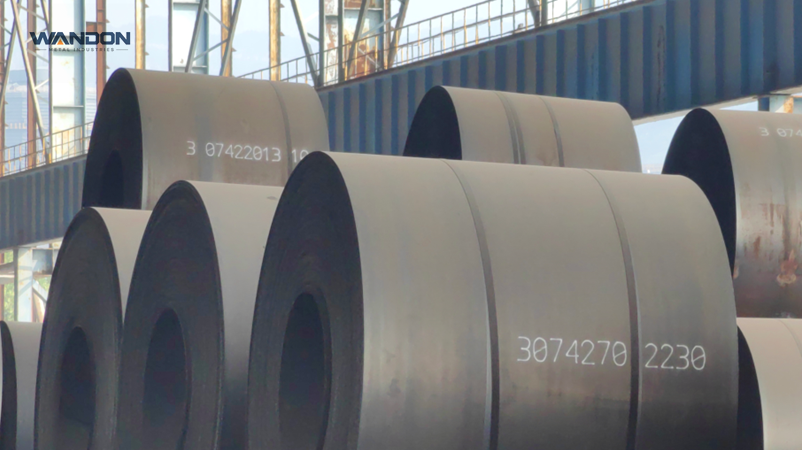
Material substitution can be harder to identify than a suspicious quotation.
You order one steel grade.
The documents show that grade.
The labels may also show that grade.
But is the material actually what you ordered?
This is especially important for stainless steel, alloy steel and other products where chemical composition directly affects performance.
For example, a buyer may order 304 stainless steel, but the supplied material may not fully meet the required chemical composition.
The problem may not be visible.
The coils may look good. The packaging may look professional. The labels may appear correct.
None of these alone proves the material composition.
How Can You Reduce the Risk?
Before shipment, consider checking:
- Material Test Certificate (MTC)
- Heat number
- Chemical composition
- Mechanical properties
- Applicable standard
- Mill information
- Product markings
For important orders, independent testing may also be appropriate.
The purchase contract should clearly state the required material grade and applicable standard.
Never rely only on labels, photos or supplier promises when material composition matters.
3. Product Substitution — Receiving a Completely Different Material
In some cases, the problem goes far beyond a minor specification difference. The buyer may receive a completely different material from what was ordered and paid for.
For example:
Ordered: Aluminum Coil
Received: Aluzinc / Galvalume Steel Coil
At first glance, both products may have a similar metallic appearance. But they are fundamentally different materials.
Aluminum coil is primarily aluminum, while Aluzinc/Galvalume is steel coated with an aluminum-zinc alloy. Their composition, weight, performance, applications, and market value are very different.
This creates a serious risk for overseas buyers because a visual inspection alone—especially through photos or videos—may not always reveal the substitution.
For a large shipment, the difference in material value can result in a substantial financial loss.
How to Avoid It
- Clearly specify the material, alloy/grade, standard, and chemical composition in the contract.
- Do not rely only on labels, certificates, photos, or visual appearance.
- Arrange an independent pre-shipment inspection.
- When necessary, use PMI/XRF or laboratory testing to verify material composition.
- Ensure samples are taken from the actual goods being shipped, not separately prepared samples.
- Verify coil numbers, labels, packing lists, and inspection records before loading.
Similar appearance does not mean the same material. Verify what is actually being loaded before you release the final payment.
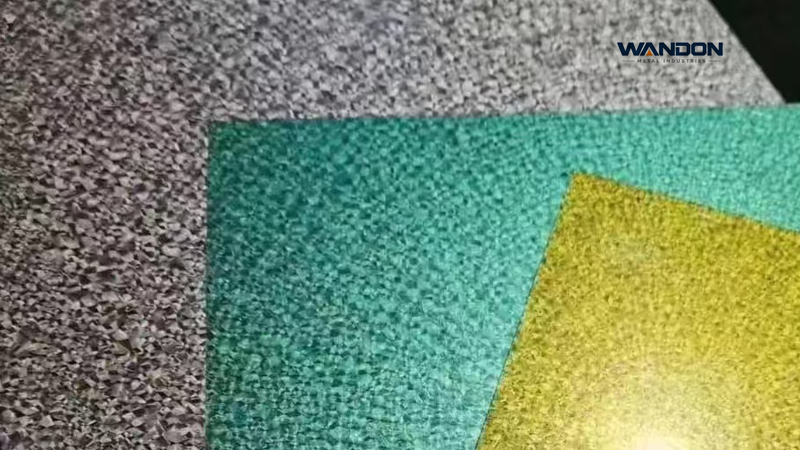
4. Insufficient Zinc or Aluminum-Zinc Coating Weight
This risk is especially important when buying:
GI / HDG / GL / Aluzinc / Galvalume steel
A product may look perfectly galvanized from the outside.
However, appearance alone cannot confirm whether the coating weight meets the agreed specification.
Why does this matter?
Because coating can directly affect:
- Corrosion resistance
- Outdoor durability
- Service life
- Product performance
Reducing coating weight can also reduce production cost.
Unfortunately, the difference may not be obvious from photographs or visual inspection alone.
How to Reduce the Risk
Clearly define:
- Base material
- Coating type
- Required coating weight
- Applicable standard
- Surface treatment
- Testing requirements
For important projects, arrange appropriate inspection or testing before shipment.
A shiny surface doesn’t prove that the coating meets your specification.
5. Supplier Disappears After Receiving Payment
Among the most serious steel trade scams, payment fraud can result in the loss of an entire deposit or order value.
The process may start normally.
You find a supplier online.
They respond quickly.
Their quotation looks attractive.
They send factory photos, certificates, product videos and company documents.
Communication seems professional.
Then they ask for payment.
After the money is transferred, communication becomes slower.
Eventually, the supplier disappears.
Factory Photos Don’t Prove Factory Ownership
Today, photos and videos are easy to obtain or copy.
A supplier may send you:
- Factory photos
- Production videos
- Certificates
- Product catalogs
- Warehouse pictures
- Loading photos
But ask yourself:
Who actually owns the factory?
Where were those photographs taken?
Does the company receiving your payment actually operate or control that facility?
These questions should be answered before payment, not afterward.
Verify the Supplier Before Sending Money
For significant orders, check:
- Company registration
- Registered address
- Business scope
- Factory location
- Production capability
- Export experience
- Company bank account
- Website and contact information
- Relationship between the supplier and factory
Also pay close attention to unexpected changes in payment instructions.
If a supplier suddenly asks you to transfer money to another company or bank account, verify the change independently before making payment.
6. Steel Shipment and Quantity Shortage
You order 100 tons.
The invoice says 100 tons.
The packing list says 100 tons.
But how much steel was actually shipped?
Shipment shortages are another risk associated with steel trade scams, especially when buyers have no independent inspection or loading supervision in China.
Problems may involve:
- Missing bundles
- Fewer coils
- Incorrect piece count
- Incorrect weight
- Differences between theoretical and actual weight
- Products listed but not actually loaded
Actual Weight vs. Theoretical Weight
This deserves special attention.
Some steel products are commonly quoted based on theoretical weight. Others may be settled according to actual weight.
Neither method is automatically wrong.
Problems occur when the buyer and supplier use different calculation methods without clearly defining them in advance.
Therefore, the quotation and contract should state:
How will the final quantity and weight be calculated?
Loading Supervision Can Reduce the Risk
Before the container is sealed, an inspector can check:
- Product quantity
- Bundle or coil numbers
- Packaging
- Labels
- Container condition
- Loading process
- Seal number
Photos and videos can also create a useful shipment record.
The packing list should describe what was actually loaded—not simply what was ordered.
7. Fake Steel Factory or Disguised Trading Company
Many international buyers prefer to work directly with factories.
Because of this, some suppliers describe themselves as manufacturers even when they don’t own the production facility.
Misrepresentation of factory ownership is another problem commonly associated with steel trade scams.
However, there is an important distinction.
A Trading Company Is Not Necessarily a Bad Supplier
A professional trading or sourcing company can provide significant value.
It may integrate several steel mills, processors and manufacturers. It may also provide better communication, sourcing efficiency, export coordination and quality control.
Therefore:
Trading company ≠ bad supplier.
The real problem is misrepresentation.
If a company tells you:
“This is our factory.”
You should be able to verify that statement.
How Can You Verify a Chinese Steel Factory?
Check:
- Company registration
- Factory address
- Production equipment
- Raw material inventory
- Production lines
- Warehouse
- Quality-control facilities
- Employees
- Production records
- Relationship between the factory and seller
For larger orders, a physical factory audit can provide much stronger evidence than online communication alone.
You don’t necessarily need to travel to China yourself.
A local representative can visit the factory, verify the facilities, take photographs and videos, and provide an independent report.
Why Do Buyers Still Fall for Steel Trade Scams?
Most experienced buyers already know that an offer that looks too good to be true may carry additional risk.
So why do problems still happen?
Because price is powerful.
A buyer may receive ten quotations and naturally focus on the cheapest one.
The thinking may become:
“Maybe this supplier really has a special source.”
Or:
“Maybe everyone else is making too much profit.”
Sometimes that’s true.
However, sometimes buyers start looking for reasons to believe the low price instead of looking for evidence that explains it.
This can create a dangerous cycle:
Market Price → Extremely Low Offer → Excitement → Payment → Problem → Another Extremely Low Offer → Repeat
The solution isn’t to stop negotiating.
Instead, change the question.
Don’t ask only:
“Who has the lowest price?”
Ask:
“Why is this price lower, and can I verify the reason?”
How to Avoid Steel Trade Scams When Buying from China
Many steel trade scams can be avoided by carrying out a few basic checks before payment.
An unusually low quotation shouldn’t automatically be rejected.
Instead, investigate it.
First, make sure you’re comparing exactly the same specification.
Then ask the supplier to explain the price difference.
Compare:
- Material grade
- Mill
- Standard
- Thickness
- Tolerance
- Width
- Coating
- Surface
- Weight basis
- Packaging
- Payment terms
- Delivery terms
Next, verify whether the supplier and factory are genuine.
Finally, consider inspecting the goods before shipment when the order value justifies it.
The principle is simple:
A legitimate low price should have a legitimate explanation.
A Simple Checklist to Avoid Steel Trade Scams
Before placing an order with a new Chinese steel supplier, ask these questions.
Supplier Verification
Is the company legally registered?
Can you verify who you’re actually dealing with?
Factory Verification
Does the factory actually exist?
Does it have the equipment needed to produce your order?
Product Verification
Are the material grade, dimensions, tolerances, coating and surface requirements clearly defined?
Price Verification
Is the quotation commercially reasonable?
If it is significantly lower than comparable quotations, can the supplier explain why?
Payment Verification
Does the beneficiary information match the company you’re dealing with?
Have there been any unexpected bank account changes?
Pre-Shipment Inspection
Can the material be inspected before shipment?
Loading Supervision
Can the quantity and container loading be independently verified?
If several of these questions cannot be answered clearly, consider delaying payment until you have more information.
The Lowest Steel Price May Not Be the Lowest Cost
Imagine Supplier A is USD 50 per ton more expensive than Supplier B.
For a 20-ton order, that’s:
USD 1,000 more.
Naturally, Supplier B looks more attractive.
But now consider the potential cost of:
- Wrong material
- Insufficient thickness
- Incorrect coating
- Quantity shortage
- Poor surface quality
- Rejected goods
- Production delays
- Customer claims
- Replacement costs
- Losing the deposit
Suddenly, USD 1,000 doesn’t look very large.
This is why professional sourcing isn’t simply about finding the lowest quotation.
A better formula is:
Right Product + Right Supplier + Right Price + Controllable Risk
Don’t Just Compare Prices. Compare What You’re Actually Buying.
This is one of the most important principles when sourcing steel from China.
Two suppliers may both quote:
GI Coil — 0.50 × 1,250 mm
But are they actually offering the same product?
Compare:
- Base steel
- Actual thickness
- Thickness tolerance
- Zinc coating
- Surface treatment
- Spangle
- Coil weight
- Steel mill
- Packaging
- Inspection requirements
- Commercial terms
Only after these factors are aligned does the price comparison become meaningful.
Same specification on paper doesn’t always mean the same product.
How WANDON Helps Reduce Steel Sourcing Risks in China
Buying metal from China shouldn’t depend on guesswork.
WANDON works within China’s metal supply and manufacturing ecosystem. We help international buyers make sourcing more transparent and controllable.
Our support can include:
- Metal Sourcing
- Supplier Verification
- Factory Audits
- Product Inspection
- Production Monitoring
- Quality Control
- Pre-Shipment Inspection
- Container Loading Supervision
Most importantly, you don’t necessarily have to purchase the material from WANDON.
If you already have a supplier in China, we can still help verify the factory, inspect the products or supervise loading.
Our goal is simple:
Help you understand who you’re buying from, what you’re buying, and what is actually being shipped.
Not Sure About a Chinese Steel Supplier?
If you’ve received a quotation that looks unusually attractive, don’t immediately assume it’s fake.
But don’t assume it’s genuine either.
Verify it.
You can send us the supplier information, product specification or quotation before making payment.
We can help you evaluate:
- Whether the quotation appears commercially reasonable
- Whether important specifications are missing
- Whether the supplier should be verified
- Whether a factory audit is necessary
- Whether pre-shipment inspection is recommended
Our job isn’t to tell you that cheap means fake.
Our job is to help you understand why it’s cheap.
Final Thoughts on Steel Trade Scams
Understanding steel trade scams doesn’t mean distrusting every Chinese supplier.
China has excellent steel mills, processors, manufacturers, exporters and sourcing companies. There are also genuine opportunities to buy high-quality products at competitive prices.
The goal is to understand what should be verified before you send your money.
Remember three things:
Verify the supplier.
Verify the specification.
Verify the goods.
Because in international steel sourcing:
A low price is an opportunity when it can be explained. When it can’t be explained, it’s a risk.