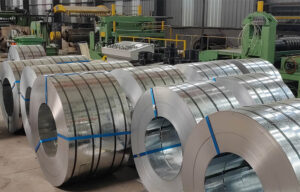
 Galvanized Coils (Sheets/Strips)
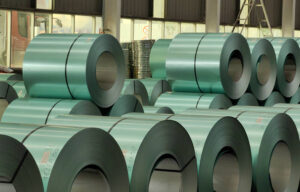 Galvalume Coils (Sheets/Strips)
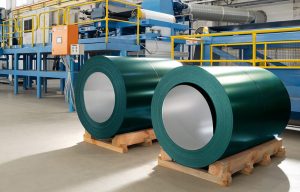 PPGI/PPGL Coils
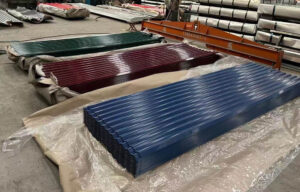 Corrugated Roofing sheets
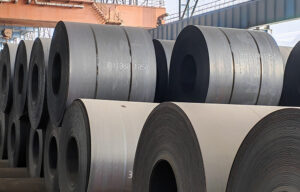 Hot Rolled Coils (Sheets/Strips)
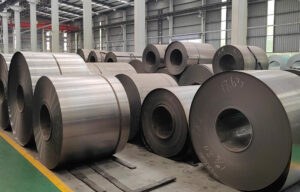 Cold Rolled Coils (Sheets/Strips)
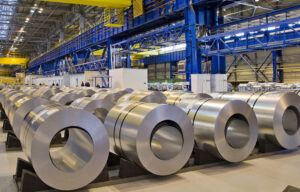 Aluminum Coils (Sheets)
 Tinplate Coils
The 304 stainless steel price can vary significantly between suppliers in China. Every buyer wants a better price, and there is nothing wrong with that.
However, there is a big difference between a competitive quotation and a price that simply doesn’t make commercial sense.
That’s normal. After all, reducing purchasing costs is an important part of sourcing.
However, there is a big difference between a competitive price and an impossible price.
Imagine this situation.
You send the same inquiry for 304 stainless steel coil to six suppliers in China.
Five suppliers quote between:
RMB 15,500 and RMB 16,500/MT
Then, another supplier offers:
RMB 10,000/MT
At first, this may look exciting.
You may think:
“Finally! I found the real factory price.”
But wait.
If five suppliers are buying raw materials from the same market, why is this supplier 30–40% cheaper?
There may be a good reason.
For example, the supplier may have old inventory. The specifications may also be different. Or the company may be accepting a very small margin.
However, there is another possibility.
You may not be buying what you think you are buying.
Therefore, an extremely low price doesn’t automatically mean fraud.
But an extremely low price without a reasonable explanation is a warning sign.
Before you send a deposit, find out why the price is so low.
Note: The prices used in this article are examples for explaining sourcing risk. Actual stainless steel prices fluctuate according to raw material prices, specifications, mills and market conditions.
Why Can the 304 Stainless Steel Price in China Vary?
China has one of the world’s largest stainless steel manufacturing and distribution industries.
So naturally, different suppliers will offer different prices.
Price differences may come from:
- Steel mill and material origin
- Order quantity
- Thickness and tolerance
- Width
- Surface finish
- Processing requirements
- Inventory conditions
- Payment terms
- Packaging
- Transportation
- Supplier margins
A supplier being cheaper than another supplier is completely normal.
The problem begins when the difference becomes so large that normal commercial factors can no longer explain it.
For example:
| Supplier | Quotation | Initial Impression |
|---|---|---|
| Supplier A | RMB 15,800/MT | Normal |
| Supplier B | RMB 16,100/MT | Normal |
| Supplier C | RMB 15,950/MT | Normal |
| Supplier D | RMB 10,000/MT | Great deal? |
When you see this situation, don’t immediately ask:
“Why are Suppliers A, B and C so expensive?”
Ask:
“Why can Supplier D be so cheap?”
That is a much better sourcing question.
304 Stainless Steel Has a Cost Floor
Think about it this way.
A stainless steel supplier doesn’t get nickel for free.
Chromium isn’t free.
Scrap isn’t free.
Steelmaking isn’t free.
Rolling isn’t free.
Processing isn’t free.
Packaging and transportation aren’t free either.
Every ton of 304 stainless steel starts with a real underlying material cost.
That’s why legitimate market prices normally fluctuate within a reasonable range.
Can one supplier be cheaper?
Of course, one supplier can be cheaper than another. For example, a mill may have discounted inventory. A trader may also accept a smaller margin.
However, a 30–40% price gap needs a much stronger explanation.
Can a mill have discounted inventory?
Absolutely.
Can a trader accept a smaller profit margin?
Yes.
Can someone have old stock purchased at a lower price?
Certainly.
But when most of the market is around RMB 16,000/MT and someone offers RMB 10,000/MT, the difference probably cannot be explained simply by:
“We have a better price.”
At that point, you need a better explanation.
Does the Same 304 Stainless Steel Price in China Mean the Same Product?
This is one of the biggest mistakes buyers make when comparing Chinese quotations.
Imagine receiving these two offers:
Quotation A
304 Stainless Steel Coil
1.0 × 1219 mm
USD 2,200/MT
Quotation B
304 Stainless Steel Coil
1.0 × 1219 mm
USD 1,500/MT
At first glance, they appear to be the same product.
But are they?
Before comparing the prices, ask:
Is the material grade really the same?
Is the chemical composition the same?
Is the actual thickness the same?
Is the thickness tolerance the same?
Is the surface finish the same?
Is the steel mill the same?
Is the weight calculated in the same way?
Is the packaging included?
Can both materials pass the same inspection?
Only after answering these questions can you make a meaningful price comparison.
Don’t compare prices until you’re sure you’re comparing the same product.
Why Is Some 304 Stainless Steel in China So Cheap?
There is no single answer.
An unusually low price does not automatically mean a scam.
But the larger the difference from the normal market price, the more carefully you should investigate.
Here are some possibilities.
1. The Material May Not Actually Be 304
Many stainless steel products can look very similar.
To an inexperienced buyer—or even from photographs alone—it may be impossible to determine the actual chemical composition.
The quotation may say:
SUS 304
The invoice may say:
304 Stainless Steel
The packaging may even say:
304
But ultimately, the material itself is what matters.
For significant orders, buyers should consider checking the material documentation and arranging appropriate material verification when necessary.
2. The Actual Thickness May Be Different
Thickness can have a major impact on steel cost.
For example, a buyer may believe he is purchasing:
1.00 mm
But what is the agreed tolerance?
Is the actual material consistently close to 1.00 mm?
Or is it significantly thinner?
A seemingly small difference becomes substantial when multiplied across 20 tons, 100 tons or several hundred tons.
That’s why professional purchasing should specify:
Nominal Thickness + Thickness Tolerance
not simply a product name.
3. The Weight Calculation May Be Different
Another important question:
Are you paying by theoretical weight or actual weight?
Make sure you understand how the supplier calculates quantity and settlement.
Check the relationship between:
Quotation → Contract → Production → Packing List → Weighing → Shipment
A very attractive price per ton isn’t necessarily attractive if the quantity or weight calculation isn’t what you expected.
4. Important Costs May Be Missing From the Quotation
Sometimes the initial price looks excellent.
Then the conversation continues:
“This surface costs extra.”
“Your required tolerance costs extra.”
“Export packing isn’t included.”
“That quotation was for another specification.”
“This price doesn’t include processing.”
Suddenly, the RMB 10,000 quotation isn’t RMB 10,000 anymore.
Not every adjustment is dishonest—steel prices genuinely change and specifications matter.
But before paying a deposit, make sure you understand:
Exactly what is included in the quotation?
5. In the Worst Case, There May Be No Real Deal at All
This is the risk every international buyer should understand.
Today, it isn’t difficult to create the appearance of a professional supplier.
A company can send you:
Factory photos
Production videos
Certificates
Business cards
Product catalogs
Warehouse photos
Professional quotations
A polished website
But none of these alone proves that the person you’re talking to owns or controls the factory shown in those materials.
The real question is:
Can the supplier and factory be independently verified?
“But They Sent Me Factory Photos and Videos.”
That’s useful.
But it isn’t enough for a major international purchase.
Ask yourself:
Who took those photos?
Where is that factory?
Does the company you’re paying actually own or operate it?
Can someone visit it?
Can the production equipment be verified?
Can your specific order be seen during production?
If you’re preparing to transfer tens of thousands—or hundreds of thousands—of dollars to a supplier you’ve never met, verification shouldn’t be considered an unnecessary expense.
It’s basic risk management.
Why Do Some Buyers Keep Chasing Unrealistically Low Prices?
This is where sourcing becomes psychological.
Some buyers have already had a bad experience.
They received the wrong material.
The thickness was insufficient.
The quantity was wrong.
Or they even lost a deposit.
A few months later, another supplier appears with another unbelievably low quotation.
And the buyer thinks:
“Maybe this time the cheap price is real.”
That’s the dangerous part.
The cycle can become:
Market Price
↓
Extremely Low Offer
↓
Excitement
↓
“Maybe I found the real factory.”
↓
Payment
↓
Problem
↓
Search for Another Ultra-Low Supplier
↓
Repeat
After being cheated once, the lesson shouldn’t always be:
“I chose the wrong cheap supplier.”
Sometimes the more important question is:
“Is my purchasing strategy attracting the wrong suppliers?”
If your only purchasing strategy is:
Find the cheapest supplier in China
then sooner or later, you may find someone willing to quote whatever price you want to hear.
How to Check a Suspicious 304 Stainless Steel Price in China
You don’t need to reject every unusually low quotation.
Instead:
Verify it.
Suppose five credible suppliers are around RMB 16,000/MT and another supplier offers RMB 10,000/MT.
Ask them:
Which steel mill?
What exact grade?
What chemical composition?
What thickness tolerance?
What surface finish?
Which production standard?
Actual weight or theoretical weight?
Can you provide an MTC?
Can the material be inspected before shipment?
Can we visit the factory?
Can an independent inspector check the goods?
A legitimate low price should have a legitimate explanation.
The 60-Second Price Reality Check
Before getting excited about an extremely low quotation, take one minute and do this.
Step 1 — Get Several Comparable Quotations
Don’t determine the market price from one supplier.
Compare several credible suppliers.
Step 2 — Make Sure the Specifications Are Identical
Check:
Grade · Thickness · Tolerance · Width · Finish · Mill · Weight Basis · Packaging
Step 3 — Calculate the Price Difference
A small difference can be normal.
A larger difference deserves questions.
A price dramatically below the general market level deserves verification before payment.
Step 4 — Ask Why
Don’t simply ask:
“Can you give me another discount?”
Ask:
“Why is your price significantly lower than the market?”
Step 5 — Verify Before Paying
If the explanation doesn’t fully make sense, verify:
The company.
The factory.
The product.
The bank account.
The goods before shipment.
There is no fixed percentage that proves fraud. Specifications, inventory and market conditions can create legitimate price differences.
The key issue is whether the difference can be reasonably explained and verified.
What to Verify Before Paying a Chinese Stainless Steel Supplier
For a new supplier, especially when the quotation is unusually attractive, consider several layers of verification.
Company Verification
Does the company legally exist?
Does its business information match what you’ve been told?
Factory Verification
Is the factory real?
Does it actually manufacture or process the product you’re buying?
Bank Account Verification
Does the beneficiary information make sense in relation to the company and transaction?
Unexpected bank-account changes should always be treated carefully.
Specification Verification
Does the quotation clearly state:
Grade · Standard · Thickness · Tolerance · Width · Finish · Quantity · Weight Basis · Packaging
Production Verification
Has your order actually entered production?
Pre-Shipment Inspection
Do the finished goods match the agreed specifications and quantity?
Loading Supervision
Are the correct goods actually being loaded into the container?
See More Than the Quotation — See the Supply Chain
A quotation is only one piece of the purchasing process.
Real sourcing requires understanding:
Where the material comes from
Where it is processed
Who controls production
How quality is checked
What is actually being shipped
This is particularly important when coils require slitting, cut-to-length processing, surface treatment or other secondary operations.
[INSERT IMAGE: Stainless Steel Cut-to-Length Workshop]
Real sourcing requires understanding not only the quotation, but also where and how the material is processed.
Why the Lowest 304 Stainless Steel Price in China May Cost You More
Let’s say Supplier A is USD 100/MT more expensive.
For a 20-ton order, that’s an additional:
USD 2,000
Naturally, every buyer wants to save that money.
But now consider the potential cost of receiving:
Wrong material.
Wrong thickness.
Insufficient quantity.
Poor surface quality.
Incorrect specifications.
Unusable goods.
Or no goods at all.
Suddenly, the cheapest quotation may become the most expensive purchasing decision.
Good sourcing isn’t about paying the highest price.
And it isn’t about paying the lowest price.
It’s about finding:
The right product + the right supplier + the right price + controllable risk.
Don’t Just Compare 304 Stainless Steel Prices — Compare What You’re Buying
This is perhaps the most important point in this entire article.
If Supplier A quotes:
USD 2,200/MT
and Supplier B quotes:
USD 1,500/MT
don’t immediately conclude:
Supplier B is USD 700 cheaper.
First determine whether both suppliers are actually offering:
The same grade
The same chemistry
The same thickness
The same tolerance
The same finish
The same weight
The same quality
The same commercial terms
Only then are you truly comparing prices.
Same specification on paper doesn’t always mean the same product.
How WANDON Helps You Source Metal Safely from China
At WANDON, we work within China’s metal supply and manufacturing ecosystem.
But our role doesn’t have to begin and end with selling you our own products.
We can also support international buyers with:
Metal Sourcing
Supplier Verification
Factory Audits
Product Inspection
Production Monitoring
Quality Control
Loading Supervision
And importantly:
You don’t necessarily have to buy the material from WANDON.
If you already have a Chinese supplier but want someone locally to verify the factory or inspect your goods, we can help.
Our goal is to make your sourcing process in China more transparent, more controllable and less dependent on guesswork.
Received an Unusually Low 304 Stainless Steel Price from China?
Send us the quotation before you send the money.
We can help you look at it from a sourcing perspective:
Is the price commercially reasonable?
Are the specifications actually comparable?
Is anything important missing?
Does the supplier need further verification?
Should the factory be inspected?
Should the goods be checked before shipment?
Sometimes an unusually low price has a perfectly reasonable explanation.
Sometimes it doesn’t.
Our job isn’t to tell you that cheap means fake.
Our job is to help you understand why it’s cheap.
Final Thought: Understanding the 304 Stainless Steel Price in China
China has excellent steel mills.
It has excellent processors.
It has experienced trading companies.
And it remains one of the world’s most competitive markets for sourcing metal products.
There are real bargains in China.
There are legitimate low-cost suppliers.
There are genuine opportunities to reduce purchasing costs.
But there is no magic that makes raw material costs disappear.
So when the normal 304 stainless steel price in China is around RMB 16,000/MT and someone offers supposedly identical material for RMB 10,000/MT, don’t immediately ask:
“How much can I save?”
First ask:
“What am I actually buying?”
Because:
A low price is an opportunity when it can be explained.
When it can’t be explained, it’s a risk.